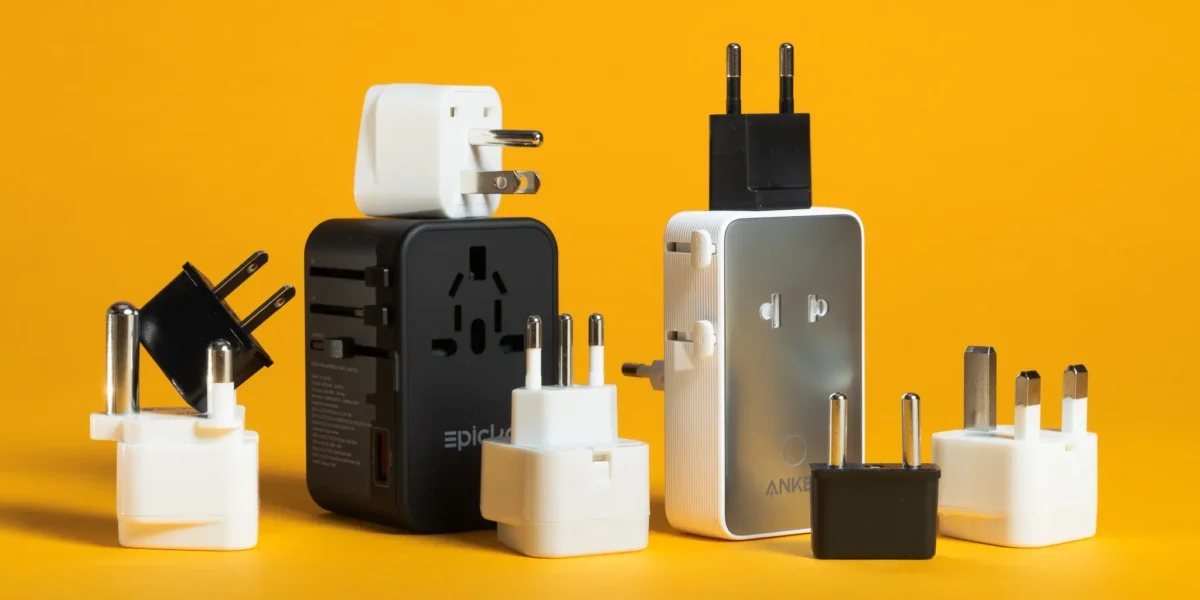
A product can look identical across a brand’s regional stores while carrying a different model number, SIM configuration, wireless specification, keyboard layout, warranty policy, or accessory bundle. In other cases, the hardware is unchanged and only the commercial name, color selection, packaging language, or promotional bundle differs. These variations are not governed by one universal rule. Buyers need to compare the complete model number and regional specifications rather than assuming that products sharing a marketing name are interchangeable.
Why Are Identical Products Sold Under Completely Different Names in Different Countries?
Regional naming can reflect branding decisions, trademark availability, sales channels, and differences between product configurations.
Market Tier Positioning: A manufacturer may place similar hardware in different product families or price tiers depending on the local range and competing products. A different name does not necessarily mean that the device has been technically downgraded. The specifications and model number must be compared separately.
Technical SKU Encoding (SKU Suffixes): Regional model codes help manufacturers distinguish configurations, distribution channels, colors, storage capacities, SIM support, and service parts. Samsung’s official regional support pages, for example, identify the Galaxy S24 Ultra as SM-S928B/DS in several markets. The longer sales code varies further by country and color. However, buyers should not treat one letter as a permanent universal code for a chipset, carrier lock, or region across every Samsung generation.
Local Consumer Psychology: Claims that consumers in one country prefer numeric names while another market prefers emotional names are difficult to prove for a specific product. A more practical explanation is that regional subsidiaries adapt names to the existing product portfolio, language, retailer requirements, and local brand strategy.
Why Do Official Product Boxes Include Full Accessories in One Country but Suffer Severe Cuts in Another?
The contents of a retail box can vary by model, country, seller, and promotion. A power adapter may be included in one version, sold separately in another, or added by a retailer rather than packed by the manufacturer.
Global Plug Standards and Voltage Variations: When a wall adapter is included, its plug must be suitable for the destination market. Many modern adapters support a broad input-voltage range, but the plug shape remains region-specific. This is one reason manufacturers use separate regional packages or sell the adapter independently.
Retail Point-of-Sale Pressure: Local competition and promotional strategy can influence bundles, but it is inaccurate to claim that developing markets always receive more accessories while mature markets receive fewer. A case, charger, or screen protector shown on a store page may be a temporary gift rather than a factory-sealed accessory. Buyers should separate the official “In the Box” list from retailer bonuses.
Trademark and Intellectual Property Conflicts: When Global Brands Collide With Local Trademarks
Trademark rights are territorial. A name available in one country may conflict with an existing registration or established brand in another. WIPO defines a trademark as a sign that distinguishes one enterprise’s goods or services from those of another, and protection is obtained under the applicable national or international registration system.
A company may therefore use another name, negotiate permission, or redesign its branding before entering a market. Trademark conflicts are one possible reason for regional naming, but they are not the explanation for every renamed product.
Real-World Examples:
Mazda’s roadster illustrates regional branding rather than a simple forced renaming. Mazda officially refers to the vehicle as the MX-5, the MX-5 Miata in North America, and the Roadster in Japan. Earlier Japanese models were sold under the Eunos Roadster name. Mazda’s own history confirms these regional names, but does not establish that European trademark law forced the use of MX-5.
Strict Government Regulations and Safety Standards in Each Country
Regional compliance rules can require separate testing, labels, documentation, software settings, or hardware configurations.
E-Waste Reduction Directives: The EU’s common-charger rules require covered categories of portable electronic equipment to use USB-C and provide consumers with clear information about charging requirements. They also allow consumers to purchase covered devices without a charger. The rules do not require every manufacturer to remove the charger from every box, nor do they provide a general tax reduction for doing so.
Mandatory Regional Compliance Certifications: Radio-frequency equipment marketed or imported into the United States must follow the appropriate FCC equipment-authorization procedure. In the European Economic Area, covered products may require CE marking to declare conformity with applicable EU legislation. CE marking is not always a third-party “certification,” and RoHS compliance is a separate legal obligation concerning restricted substances.
Wireless Spectrum Allocation Restrictions: Countries allocate and license spectrum differently. Manufacturers may enable different cellular bands, antennas, or radio features for particular markets. GSMA materials show that mobile networks use several frequency ranges and that spectrum availability differs between countries. Buyers should therefore compare the exact supported bands instead of relying on the product name alone.
Differences in Local Consumer Habits and Practical Needs
Regional variants may differ in SIM configuration, software availability, keyboard layout, language support, and camera behavior. These differences must be checked by exact model and release year.
| Market | Possible Regional Difference | What Buyers Should Verify |
|---|---|---|
| China mainland, Hong Kong, or Macao | Certain phone models may have different physical-SIM or eSIM configurations | Exact model number, number of supported lines, and carrier compatibility |
| United States and selected newer markets | Some iPhone versions are eSIM-only | Whether the destination carrier supports eSIM activation |
| Japan and certain other regions | Some devices may prevent the camera shutter sound from being muted | Manufacturer documentation for the exact model and region |
| Europe and other multilingual markets | Laptop keyboard layouts and printed symbols may differ | Physical keyboard layout, language, and replacement-key availability |
Apple’s current SIM documentation shows why broad regional claims quickly become outdated. For example, all iPhone 14-or-later models originally sold in the United States are eSIM-only, while the list of eSIM-only countries is broader for some newer generations. Other versions may support both nano-SIM and eSIM.
Apple also states only that the camera shutter cannot be muted in “some countries and regions.” It does not attribute this behavior universally to a named anti-voyeurism law, so buyers should avoid repeating that explanation as a confirmed legal requirement.
Extreme Weather and Climate Factors Forcing Component Adjustments
Regional climate modifications are common in specialized industrial, automotive, marine, or outdoor equipment, but they should not be assumed for ordinary consumer electronics.
Thermal Management Hardware: A phone or laptop sold in a hot country is not automatically equipped with a larger vapor chamber, different thermal paste, or faster fan than the same model sold elsewhere. Such a difference should appear in the manufacturer’s specifications, service manual, regulatory filing, or teardown of the exact model.
Battery Chemistry in Sub-Zero Climates: Lithium-ion performance is affected by temperature, but this does not prove that retail devices in colder countries receive different batteries or power-management chips. Manufacturers generally publish one operating-temperature range for a model unless a regional specification states otherwise.
Conformal PCB Coating: Moisture-resistant coatings may be used in products designed for harsh environments. The claim that consumer PCBs sold in tropical markets routinely receive an additional coating requires model-specific evidence.
Buyers should treat undocumented climate-based hardware claims as speculation.
Local Taxes, Operational Costs, and Purchasing Power Parity (PPP)
Import tariffs, domestic taxes, exchange rates, local assembly, retailer margins, and distribution costs can change regional pricing. The WTO defines tariffs as customs duties on imports and notes that they can raise the domestic price of imported goods.
Import Tariffs and Luxury Taxes: Local assembly can reduce certain import costs in some circumstances, but labels such as CBU or CKD do not automatically explain a model-code difference. The tax treatment depends on the product classification and the destination country’s rules.
Cost-Cutting to Preserve Price Ceilings: A manufacturer may adjust storage capacity, materials, accessories, or promotions to reach a regional price target. It may also keep the product unchanged and accept a different retail price. The box contents alone do not reveal the company’s reason.
Pressure From Freight Costs and the Problem of Shipping Empty Space
Smaller packaging can reduce material use and increase the number of units carried on a pallet or shipment, but the benefit depends on the product and the redesigned dimensions.
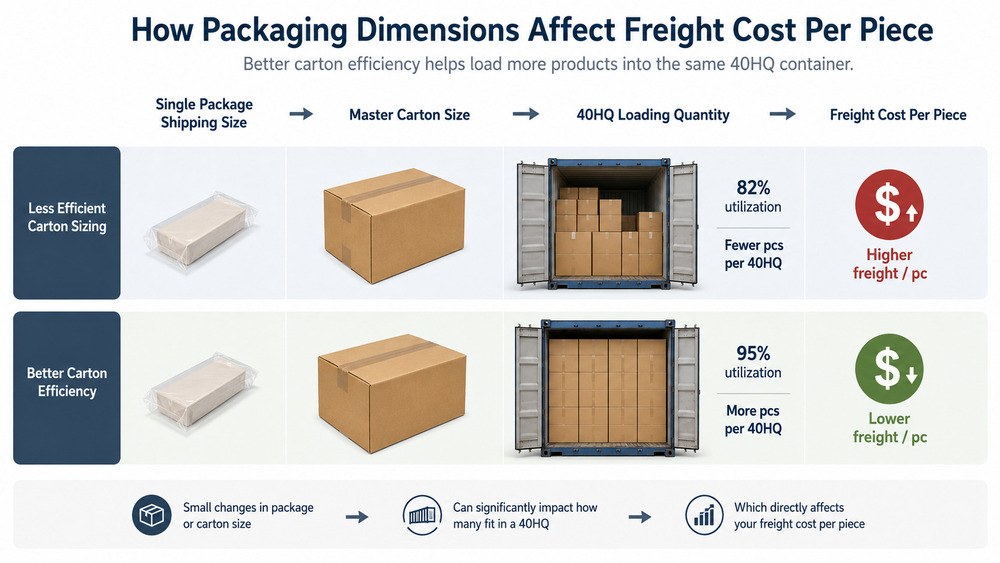
Eliminating Wasted Air Volume in Containers: Removing a large accessory can make a package thinner, but a box that is 50% thinner does not automatically allow twice as many units per container. Pallet dimensions, product weight, protective packaging, and shipping method also limit capacity.
Apple provides product-specific figures rather than a universal formula. It reported that removing the power adapter and EarPods from the iPhone 12 package allowed 70% more boxes per pallet. For the iPhone 16, an 8% reduction in packaging volume allowed more boxes on selected pallets, while Apple states that its newer iPhone 17 packaging enables 35% more units per trip than the previous design. These percentages cannot be applied to other brands or products.
How to Compare and Choose the Right Product Version for Your Needs
When buying from another country, compare the exact regional variant before paying.
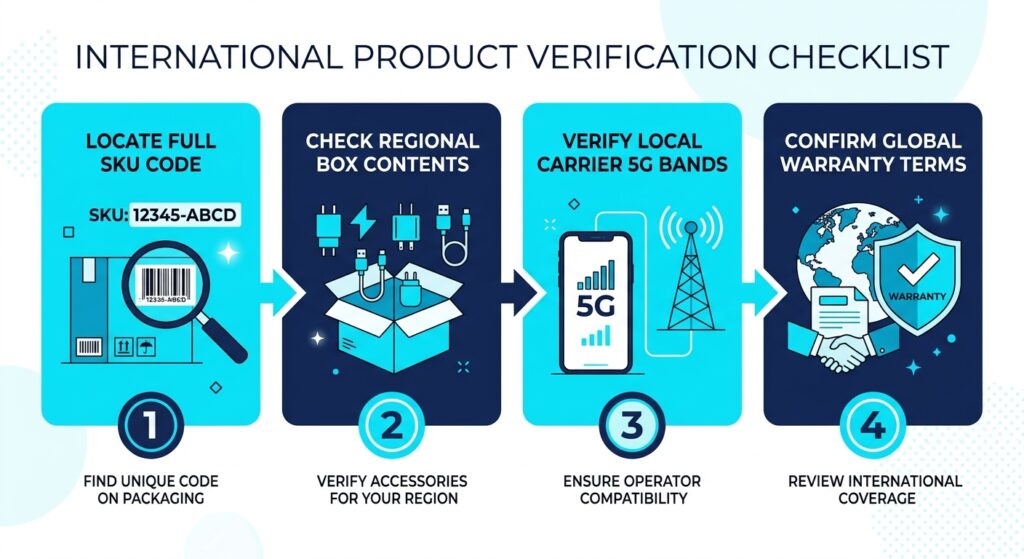
Locate the Full Model/SKU Code: Record the complete hardware model and sales code. Do not compare only names such as “Pro,” “Ultra,” or “Series 7.” Apple and Samsung both maintain support pages that identify devices by exact model numbers. Cross-Check “In the Box” Content: Read the official page for the country of purchase. Confirm whether the adapter, cable, case, mounting hardware, battery, remote, or other required part is factory-included. Treat promotional gifts as separate items.
Verify Cellular Bands and SIM Support: Compare the imported model’s supported LTE and 5G bands with the intended carrier. Also check eSIM availability, physical-SIM support, Wi-Fi frequencies, and carrier-lock status. Review Global Warranty Terms: Warranty coverage is not automatically worldwide. Apple’s U.S. warranty, for example, states that service for iPhone and several other products may be restricted to the country where Apple or an authorized distributor originally sold the device. Service options and replacement-part availability can also vary by country.
Products with the same appearance or marketing family can differ by model code, radio support, SIM arrangement, software features, compliance labels, accessories, keyboard layout, and warranty terms. Other regional differences may involve only naming, colors, packaging language, pricing, or temporary store promotions. Do not assume that every variation is caused by consumer psychology, climate engineering, environmental law, or cost cutting. Those explanations require evidence for the specific product. Core Actionable Takeaway: Compare the complete SKU, official regional specification page, factory “In the Box” list, network compatibility, power requirements, and written warranty terms before purchasing an overseas version.